.webp)


find us
47 rue Charlot, 75003 Paris, France
Kikar Kedumim 14, Tel Aviv-Yafo, 68037, Israel
contact us
t. +33 (0)1 42 76 02 67
e. info@galeriecharlot.com





François Zajéga
François Zajéga distils several years of exploration at the frontier of art, technology and science into an exhibition that questions the perception of space. Points, lines and curves form the elements of a rigorous visual vocabulary that generates complex forms.
François Zajéga's practice lies at the intersection of the drawing tradition and computer-based generative processes. Influenced by the visual vocabularies of Constructivism and abstract geometry, he builds systems in which simple elements — points, lines, curves — are organised according to rules to generate compositions of great perceptual complexity.
The exhibition “Matière I Plan I Espace” (the bars serving both as separators and as visual references to the straight line) brings together works that explore different scales and media: from works on paper to three-dimensional installations, from sculptures to digital prints. Each piece questions in its own way the transition between the two-dimensional plane and three-dimensional space, between rule and chance, between the predictable and the surprising. The “Parabole” series illustrates how a simple rule can produce an infinite diversity of results: the artist positions himself as a designer of systems, defining the parameters and letting the process generate. This work belongs to a tradition of systemic and generative art running from Sol LeWitt to Manfred Mohr, while integrating the specificities of contemporary digital media.
This exhibition highlights the connection between the different media François Zajéga has experimented with over these past years of exploring the art-technology-science ecosystem.
Influenced by drawing and its vocabulary, François Zajéga builds an aesthetic reflection around compositions and systems made up of points, lines and curves. These elementary signs, placed within a given space or plane, give rise to complex bodies/objects.
The works brought together in the exhibition “ Matière I Plan I Espace ” question the perception of space.
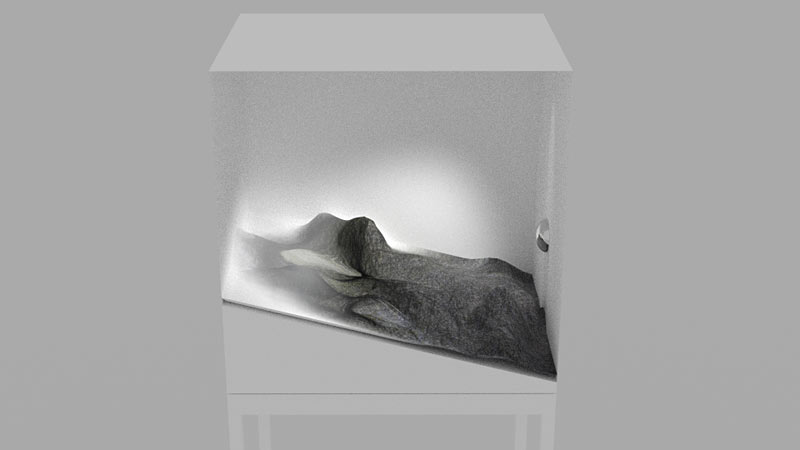
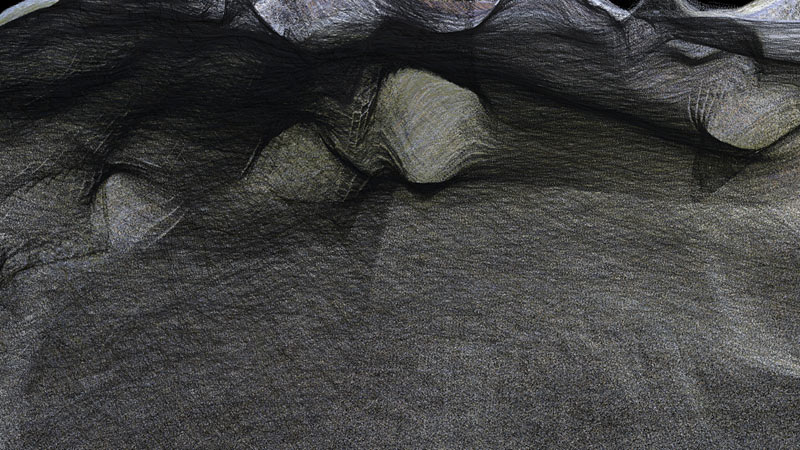
In “ Paysages intérieurs ” — a series of boxes containing a landscape model visible through a peephole — the three-dimensional nature of the landscape, animated and “ augmented ” by generative projections, is “ perverted ” by being viewed through an eyehole.
Despite their proximity and materiality, subject and object belong to two distinct spaces.
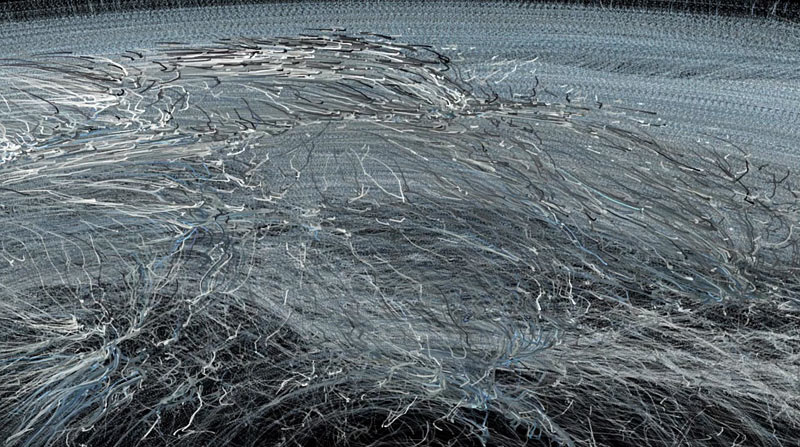
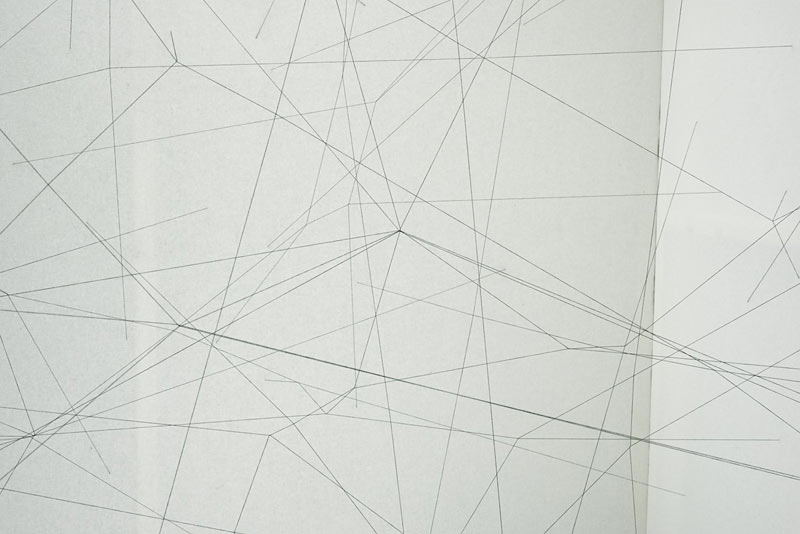
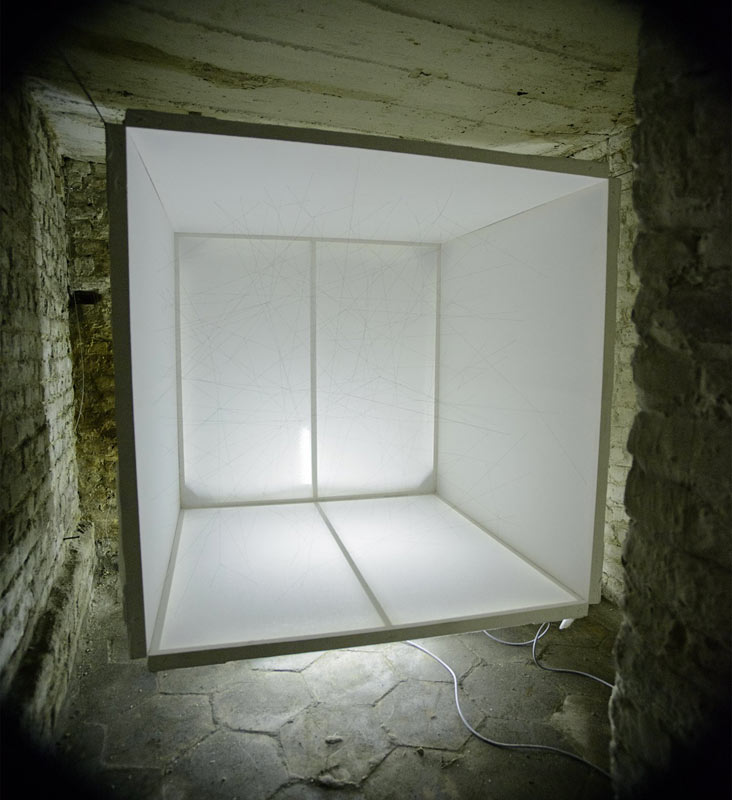
From this perceptual twist, we move to a negation of space in the installation “ Broken lines ”. A network of fine threads crosses the interior of a cube from side to side. This vibrating space excludes the viewer, who perceives the volume as a flat surface.
The laser engravings derived from the generative work “ Tumbleweed ” act as a counterpoint to this installation. Here the lines are engraved into the material of painted aluminium plates, making space emanate from an excavated plane. These “ subtractive traces ” (Tim Ingold, “ Lines: A Brief History ”) result from a dichotomy between the addition and subtraction of matter and light.
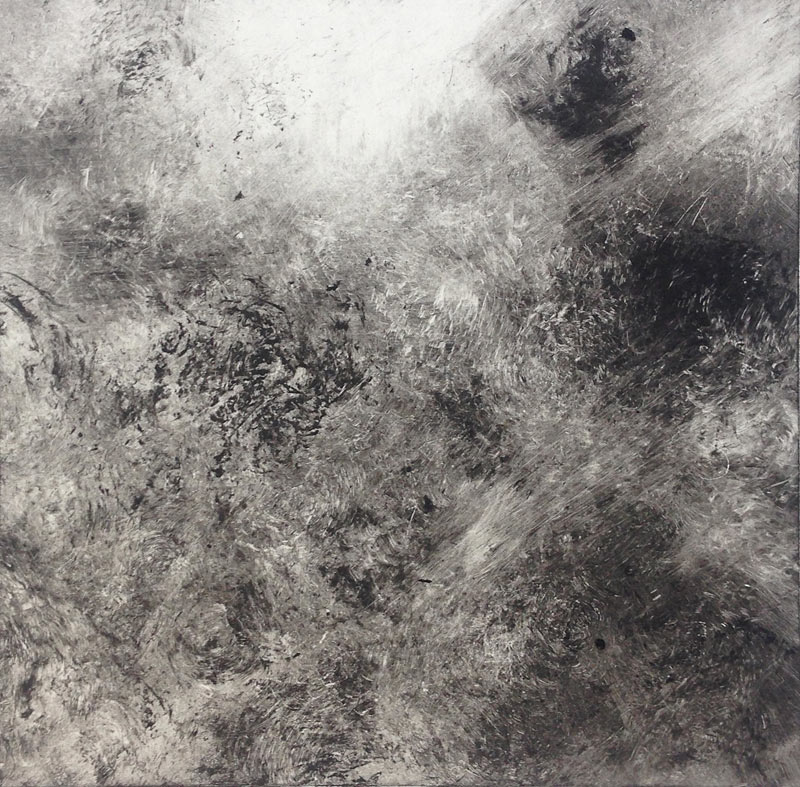
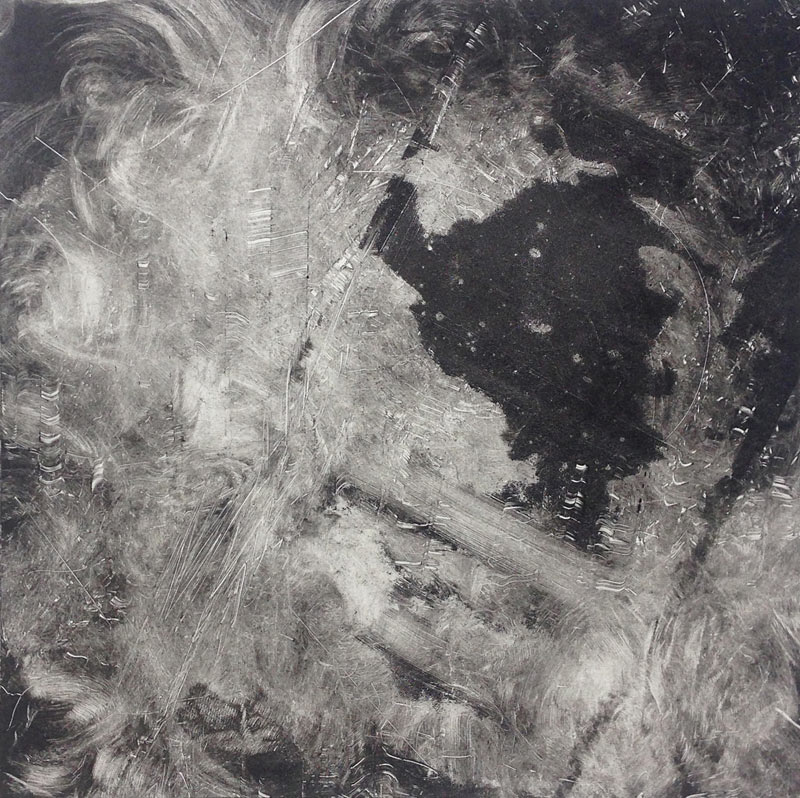
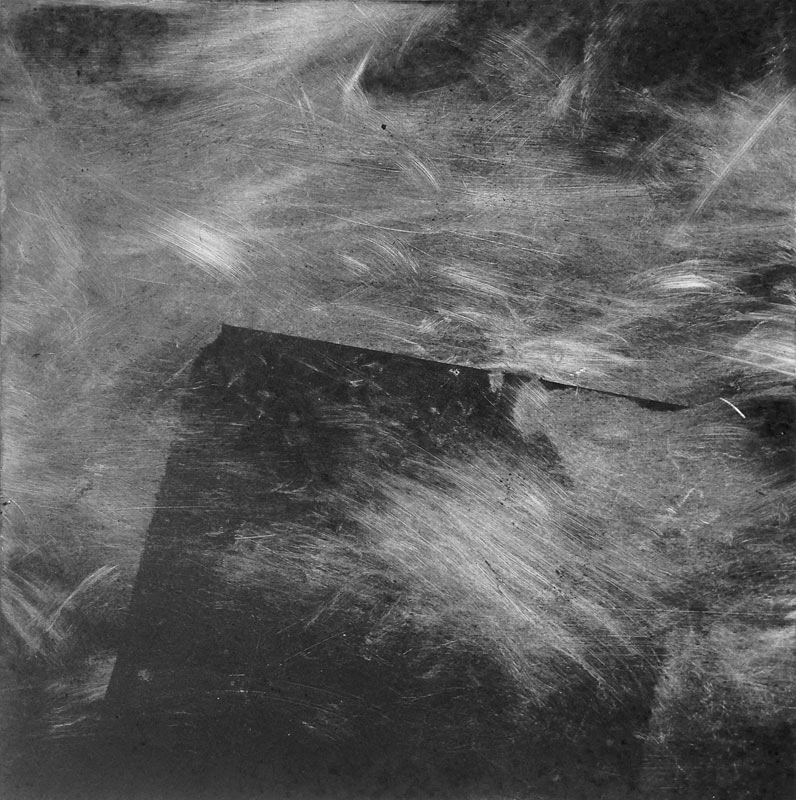
Finally, the two-dimensional works, the monotypes, evoke this light through research into matter and trace. The artist brings out the imprint of his gesture on an ink-coated metal plate. From the encounter between ink and paper emerges a composition of shades of black.
Kandinsky's observations in “ Point and Line to Plane ” are not unknown to François Zajéga. His works create material and imaginary cartographies. Frozen or animated by an imperceptible movement, they ask the viewer for time to observe. By following the lines and points in space, the eye travels across their surface, taking a veritable “ walk ”.
Contemplation through slow and subtle movement leads the observer into their own intimate dimension.


Subscribe to the Newsletter
