.webp)



find us
47 rue Charlot, 75003 Paris, France
Kikar Kedumim 14, Tel Aviv-Yafo, 68037, Israel
contact us
t. +33 (0)1 42 76 02 67
e. info@galeriecharlot.com





Manfred Mohr
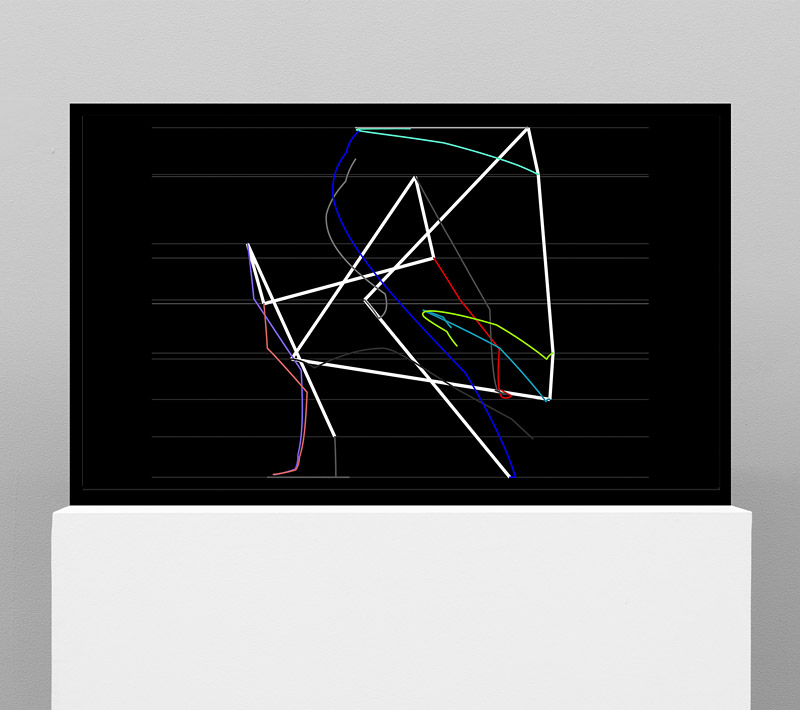
A founding figure of algorithmic art worldwide, Manfred Mohr presents Artificiata – Sonata Visuelle, a retrospective of his pioneering work in which computer code becomes the instrument of a rigorous and sensitive visual music.

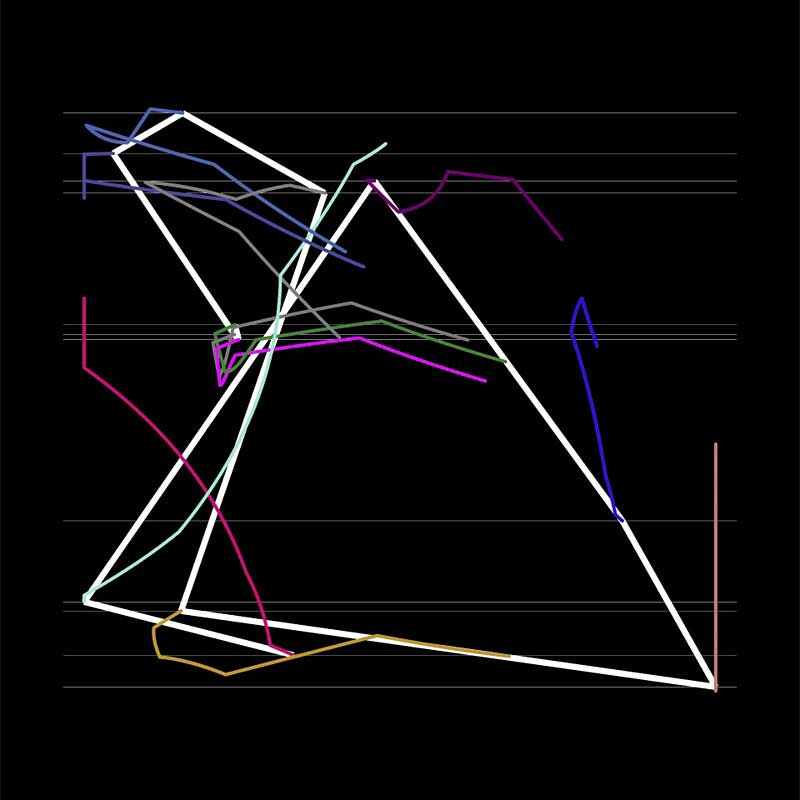
Manfred Mohr is one of the most important artists in the history of digital art. As early as 1969, he abandoned expressionist painting to entrust the making of his works to the computer — then an instrument of scientific calculation. This radical decision opened a new path: that of an art founded on rules and systems, in which form emerges from the algorithm rather than from the spontaneous gesture. His emblematic series explore the properties of the four- and six-dimensional cube, generating geometric structures of striking complexity and beauty.
Artificiata – Sonata Visuelle brings together historical works and recent pieces, making it possible to grasp the evolution of an approach that has remained exemplary in its coherence for more than fifty years. In Mohr's work, time bends to the logic of permutations: each work is a variation on a theme, each series a systematic exploration of a space of possibilities. Music — Mohr is also a jazz saxophonist — is never far away: his lines have the rhythm of a score, his algorithms the rigour of a fugue. This exhibition at Galerie Charlot is a celebration of the intelligence and sensitivity that coexist, inseparable, in every line of code.
In his interview with Catherine Millet in Les Lettres françaises, Manfred Mohr, then a young expressionist painter in his thirties, said that “he felt at ease in his time and was ready to welcome robots as his fellows”, in the same way that he accepted “any information machine — electronic calculator — as endowed with a genuine personality”.
The year was 1968, at the Galerie Daniel Templon, on the occasion of Manfred Mohr's first exhibition. A pioneer in the artistic use of what would later be called the computer, Manfred Mohr was in the 1960s an active musician, playing saxophone in jazz clubs alongside his work as a visual artist.
Influenced by Abstract Expressionism, he was inspired by his encounter with Max Bense, father of Information Aesthetics (1956), which gave rise to a more rigorous, clear and logical form of art. Mohr then began to develop what he would call a “surrealist geometry”: he introduced algorithms and formal rules into his painting practice in order to express his vision more rationally.
His friend the composer Pierre Barbaud, one of the first to experiment with algorithmic music, encouraged him to use the computer as a tool for visual expression.
It was thus during his Parisian period, in the climate of artistic and cultural effervescence of May '68, that Manfred Mohr first gained access to the computer at the University of Vincennes. After testing a plotter in 1969 at Brookhaven National Lab in New York and then at the University of Darmstadt in Germany (Zuse plotter), he was granted access to the Institut Météorologique in Paris at night, outside working hours; there, for 13 years, he produced his computer-assisted drawings (plotter drawings) on a Benson flatbed plotter.
In 1971 came “Esthétique programmée”, his exhibition at the ARC, Musée d'Art Moderne de la Ville de Paris, now recognised as the first solo exhibition of digital art in a museum.
In 1973 he placed a fixed structure at the centre of his philosophy and aesthetics: the cube, the primordial model of constructivist thought and creation.
Around 1977 he moved on to the geometric exploration of the “hypercube”: a four-dimensional cube (… and later higher dimensions) that exists mathematically; a space that is “inconceivable, but computable”.
Since then, the artist has never ceased to experiment, using the limitless possibilities of the computer to generate algorithmically a continuous body of forms. This algorithmic complexity has unfolded through plotter drawings, real-time animations, and sculptures, drawings and paintings derived from this process.
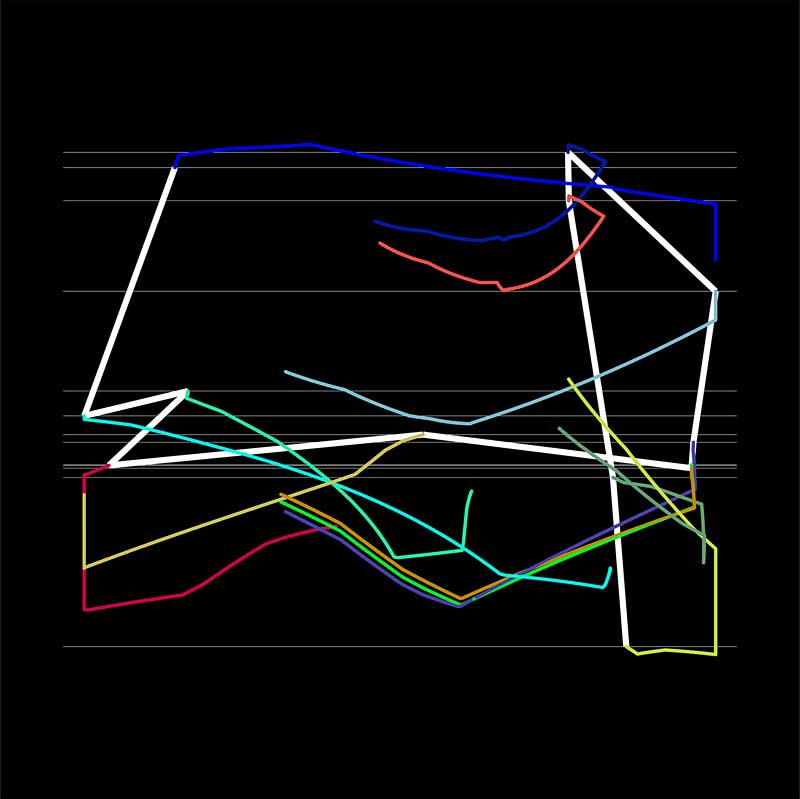
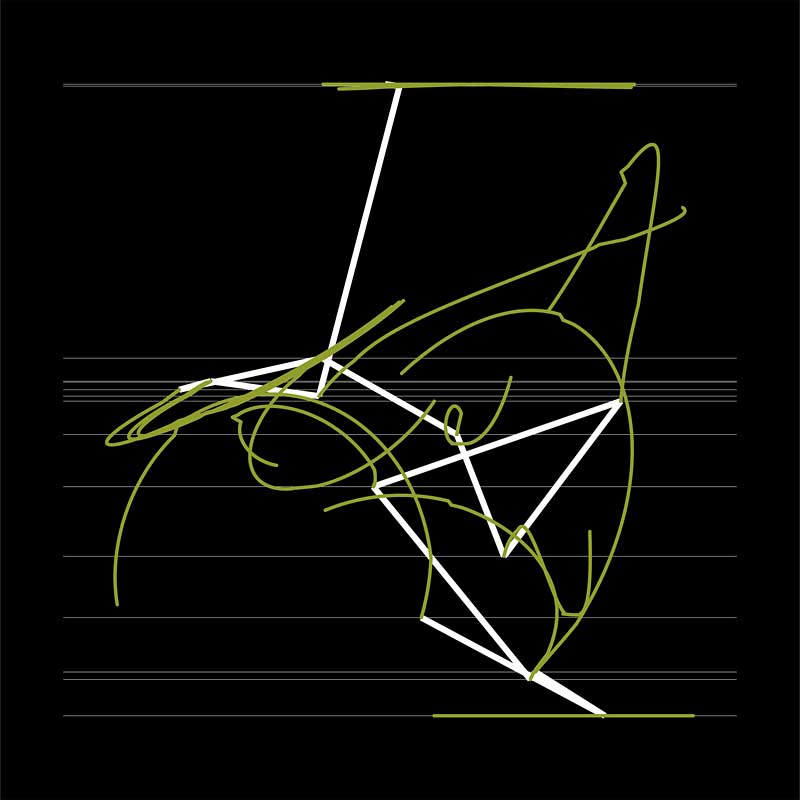
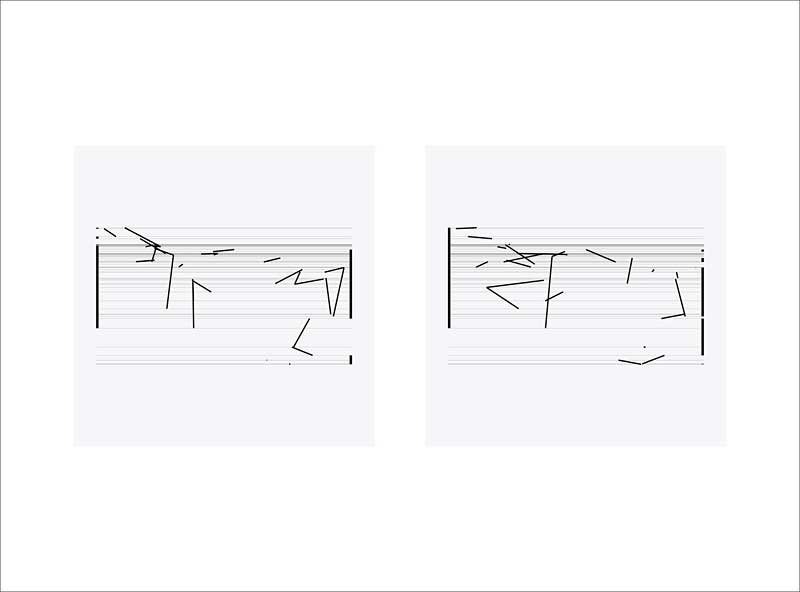
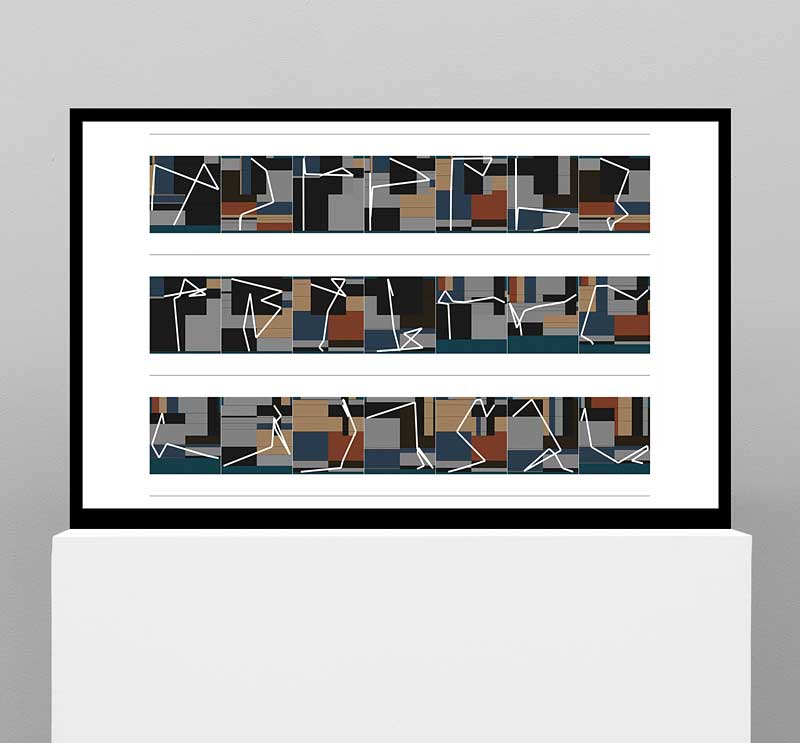
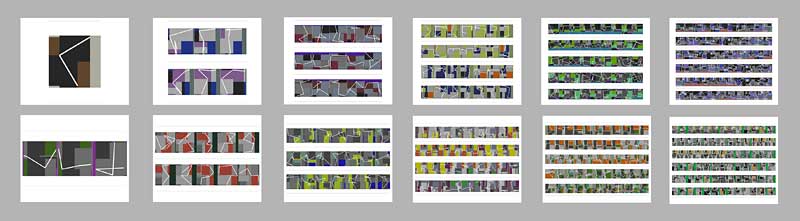
During the transition from free drawing to the computer at the end of the 1960s, Manfred Mohr created his first series of “graphic beings”, still drawn freehand but already referring to computational elements. He named this first combination of musical and visual elements ARTIFICIATA I, “artificial sonata”. The works presented in his first solo exhibition at Galerie Charlot belong to the ARTIFICIATA II series, continuing these early investigations into geometric abstraction as visual music.
Just as a musician improvises on a musical theme, Manfred Mohr multiplies combinations in his abstract creations, exploring rhythm and repetition, the loop, pauses… In his own words: “I achieve my artistic goal when a finished work can dissociate itself from its logical content and exist convincingly as an independent abstract entity.”


Born in 1938 in Pforzheim, Germany. Lives and works in New York, USA.
A founding figure of global digital art, Manfred Mohr has been exploring the mathematical structures of the cube and hyperspace through the power of algorithms since 1969.
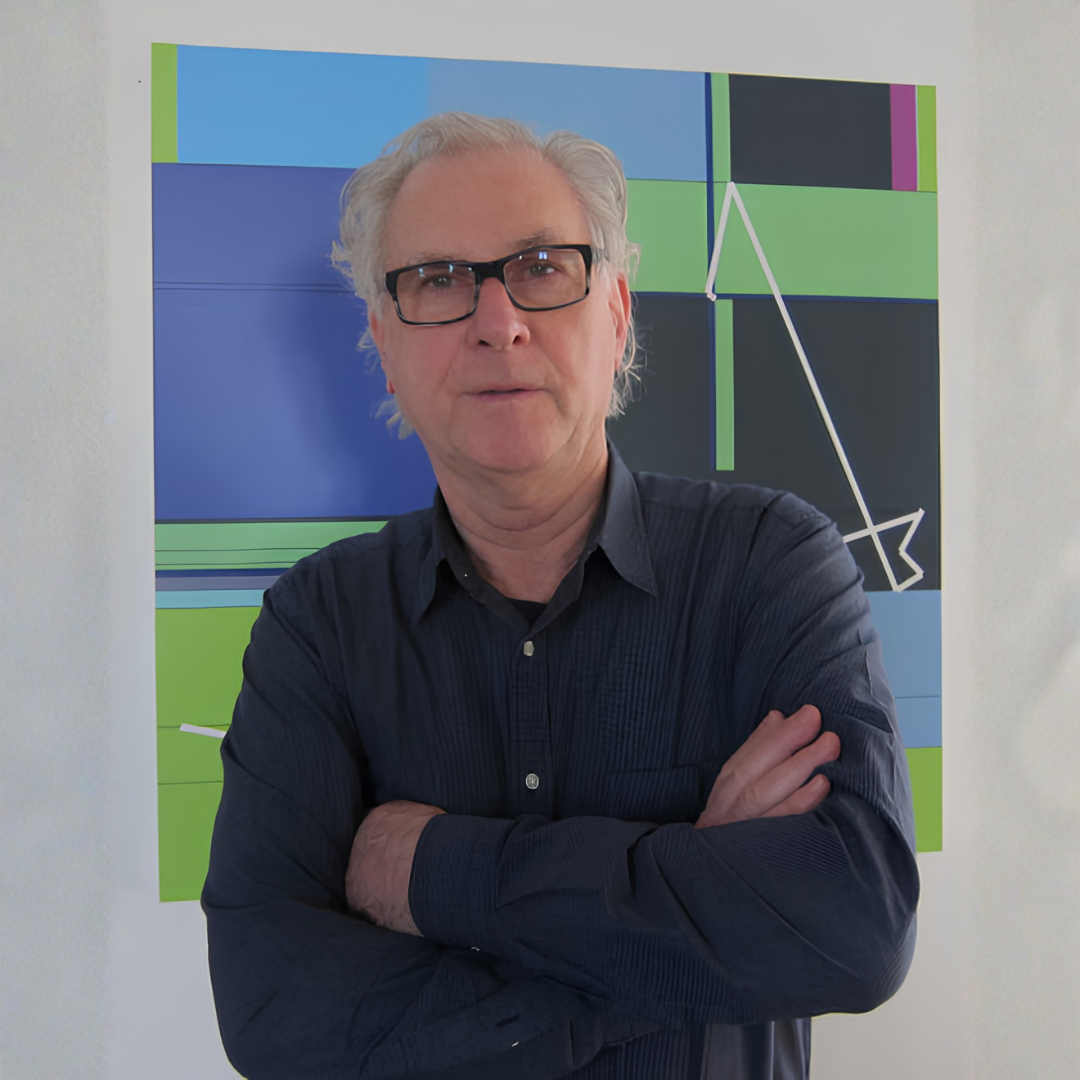
Born in 1938 in Pforzheim, Germany. Lives and works in New York, USA.
A founding figure of global digital art, Manfred Mohr has been exploring the mathematical structures of the cube and hyperspace through the power of algorithms since 1969.



Subscribe to the Newsletter
