.webp)



find us
47 rue Charlot, 75003 Paris, France
Kikar Kedumim 14, Tel Aviv-Yafo, 68037, Israel
contact us
t. +33 (0)1 42 76 02 67
e. info@galeriecharlot.com





Flavien Théry
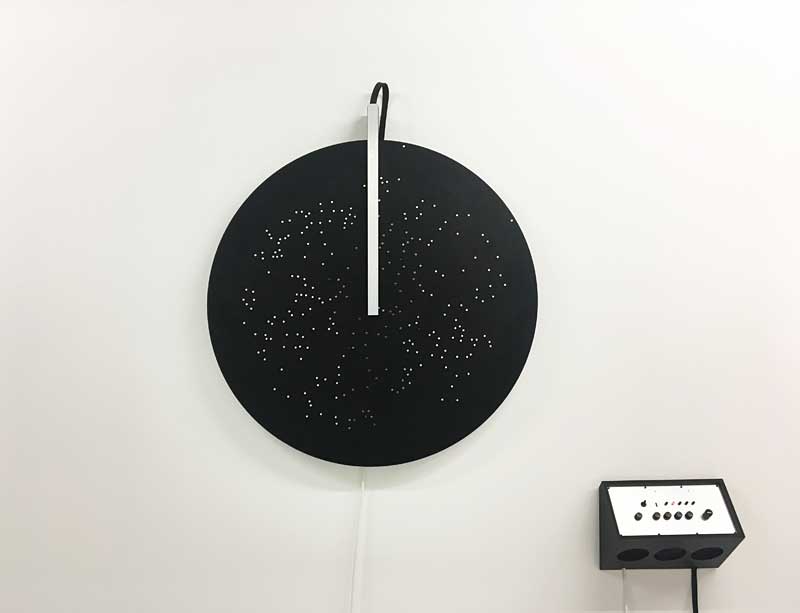
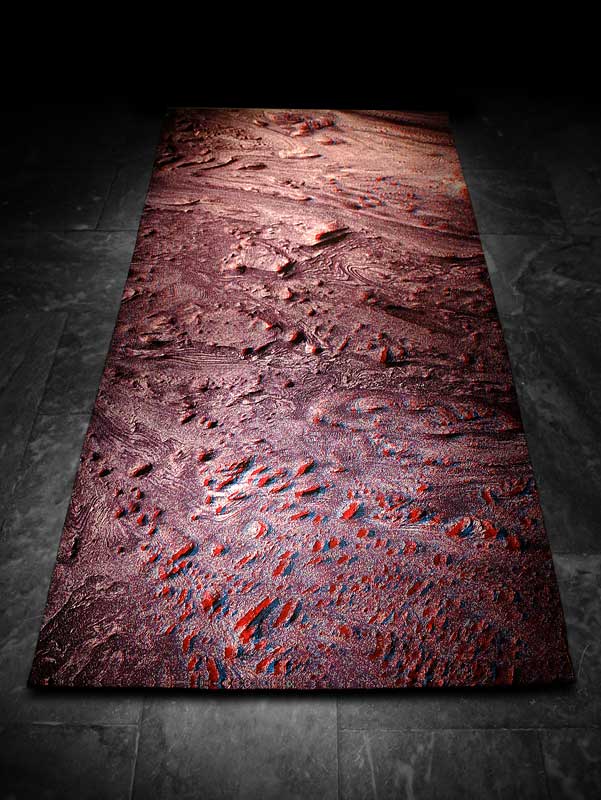
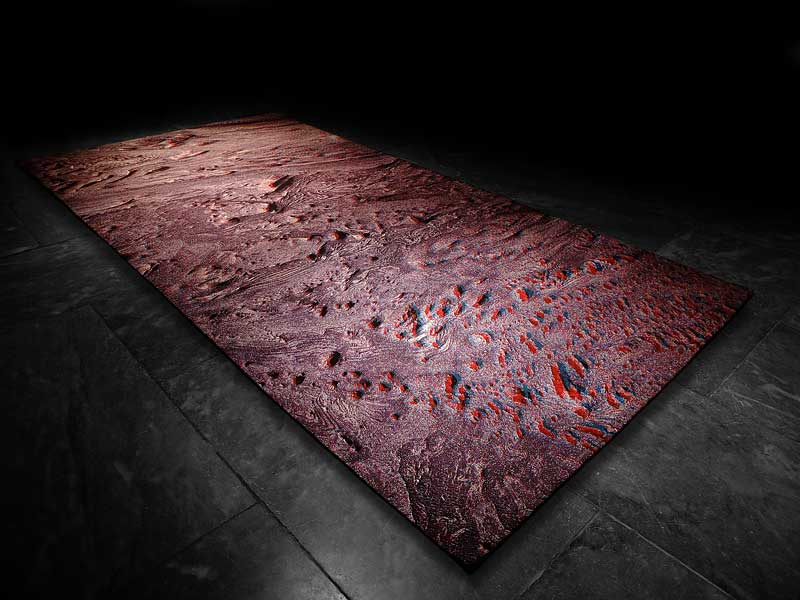
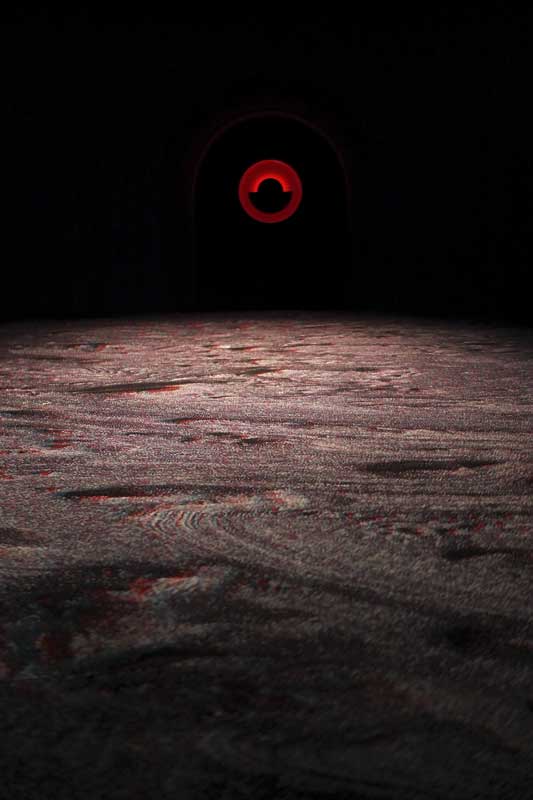
Flavien Théry's first solo exhibition at Galerie Charlot, Ici commencent les cieux is a luminous meditation on the limits of language and the conditions for communication on a cosmic scale.

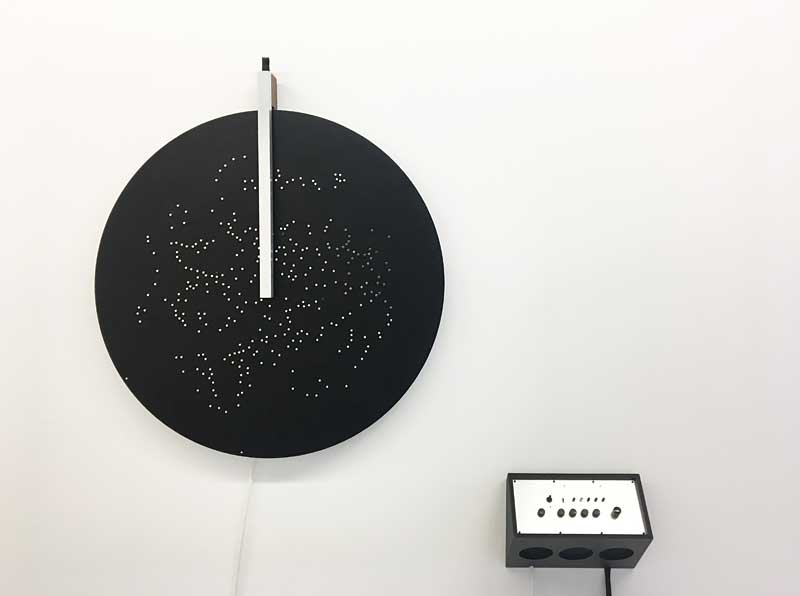
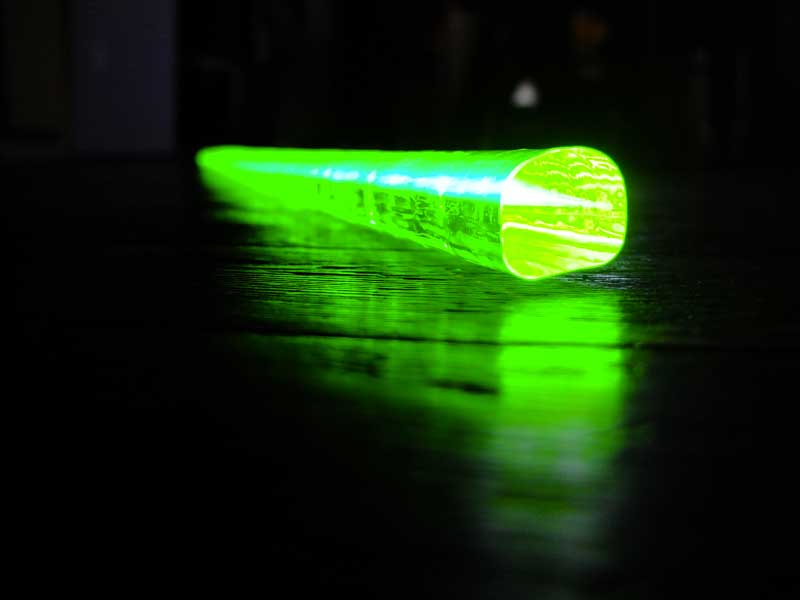
How do you speak to an extraterrestrial? The question may seem absurd; it is in fact one of the most serious there is. It forces us to identify what, in our experience of the world, is universal and what is contingent on our culture, our biology, our history. Flavien Théry starts from this question to create light installations of great formal restraint, in which light itself becomes language — or rather, in which it reveals the limits of all language.
An artist working at the intersection of art, science and poetry, Flavien Théry is interested in phenomena that exceed us — cosmic time, the infinitely large, the physical laws that structure the universe — not in order to illustrate them but to embody them in objects or spaces that alter our perception. His works have the discretion of necessary things: they do not seek to impress but to transform, subtly, the way we inhabit space and time. Ici commencent les cieux (Here Begin the Heavens) is a title that says it all: we stand at the frontier, at the tipping point between what we know and what escapes us. That is where art begins.
In his “Friending the Alien” guide (2016), Finn Brunton observes that the question of how humans might communicate with extraterrestrials is at once existential, semiotic and technological. “Which fundamental principles of human life and civilisation should be transmitted, and which media would allow us to transmit them?” It is therefore, among other things, a problem of encoding and decoding: a media problem on a cosmic scale.
When we think of such interplanetary communication, we tend to think of what is known as “passive SETI” (Search for Extraterrestrial Intelligence), the process of passively listening for signals coming from space. But there is something even more exciting: “Active SETI”, the challenge of actively signalling our presence to non-terrestrials.
As early as the late nineteenth century, the astronomers Camille Flammarion and A. Mercier advocated the use of light and electricity to communicate with our extraterrestrial neighbours. But it was the visionary poet and inventor Charles Cros who theorised a genuine method of encoding content into flashes of light. In 1869 he published “Étude sur les moyens de communication avec les planètes”, in which he developed a kind of computational proto-language for compressing and transmitting signals by light on an interplanetary scale. He drew inspiration from the new weaving and embroidery methods made possible by Jacquard's punched-card looms (which would also inspire the mechanical computer imagined in 1834 by the British mathematician Charles Babbage).
Light pulses, weaving, multimedia encoding… these precursors and visionaries paved the way for a utopia of active extraterrestrial communication, of which the “Voyager Golden Record” is no doubt one of the last examples: anodised aluminium discs containing sounds, images and words intended to portray the diversity of life on Earth, which were carried aboard the Voyager space probes in 1977. Even though the chances of these “interstellar messages in a bottle” ever being found remain extremely slim, it is quite likely that these discs may well constitute the ultimate trace of our earthly existence, lost in space.
If the Apollo programme was hailed as the beginning of a golden age of space exploration, one that would surely have opened the way to expeditions to Mars, a lunar colony and the exploration of the outer reaches of the solar system, as Stanley Kubrick had depicted in his film 2001: A Space Odyssey, by 1980 it had become clear that the moon landing had not been the first act of the conquest of space, but the last.
Since then, we have instead witnessed an ever-growing presence of robots on the surface of Mars: machines have come to occupy the human imaginative space with their analytical data.
Heir to this tradition and in homage to these emblematic ventures in interplanetary communication and exploration, the works presented in Flavien Théry's second solo exhibition at Galerie Charlot raise anew the question of this lost space imaginary.




Subscribe to the Newsletter
