.webp)



find us
47 rue Charlot, 75003 Paris, France
Kikar Kedumim 14, Tel Aviv-Yafo, 68037, Israel
contact us
t. +33 (0)1 42 76 02 67
e. info@galeriecharlot.com




Flavien Théry
“Le blanc n'existe pas” offers a meditation on light — its ambivalent nature, its paradoxical permanence, its relationship to time and space. A group exhibition that questions what we see when we believe we are perceiving light itself.

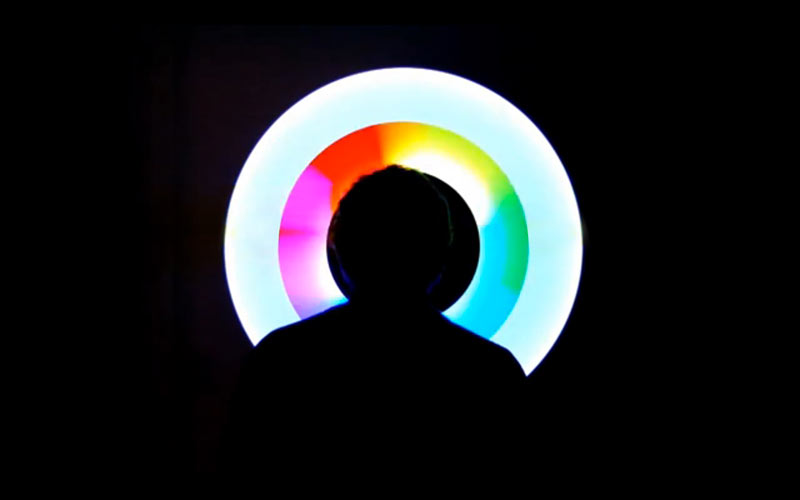
Light lies at the heart of all visual experience, and yet it remains itself imperceptible: we see what it illuminates, never light itself. This fundamental contradiction is at the core of the exhibition “Le blanc n'existe pas” (White Does Not Exist), whose title evokes the impossibility of grasping pure light — white being only ever a convention, an approximation of what escapes all grasp.
The works brought together explore the different ways in which artists can work with — or against — light. Light installations, videos, reflective or absorbent sculptures: each approach reveals a different aspect of this imponderable. Light as a symbol of self-evidence and intuition, but also as a fundamental mystery that has driven the greatest scientific revolutions, from Newton to Einstein by way of Planck. By insisting on the fact that light does not age, that it is connected to every point of its past and future trajectory, the exhibition opens a reflection on time, memory and eternity. To look at these works is to experience what seeing means — and what always remains, irreducibly, in the shadow of vision.
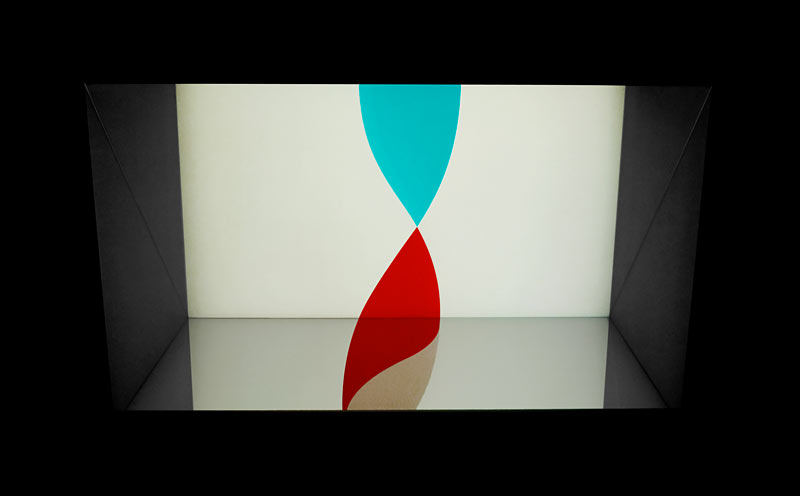
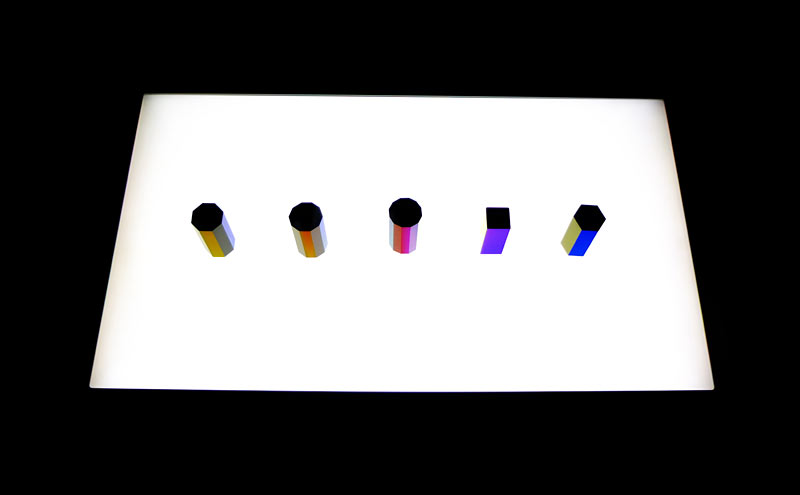
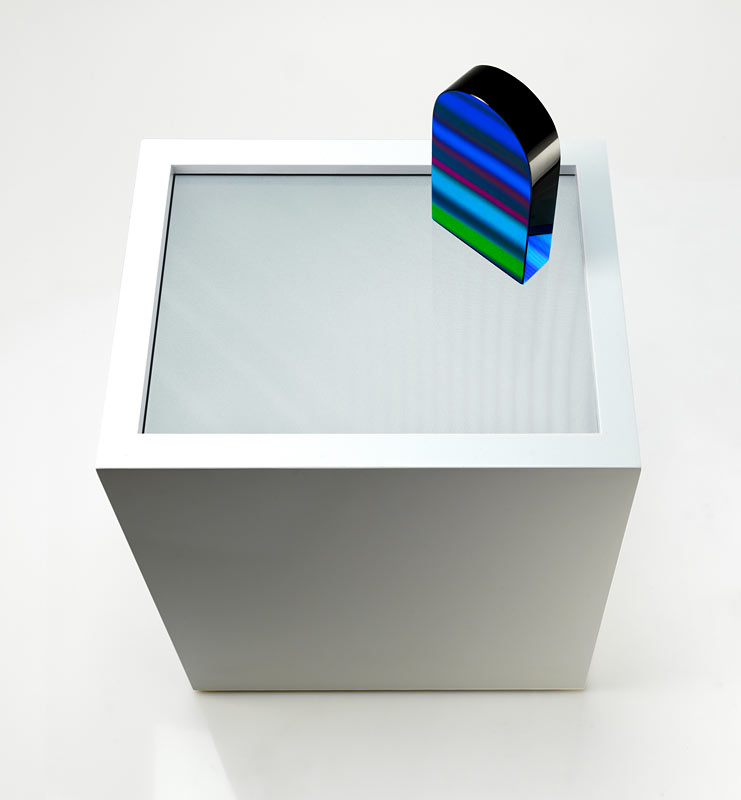
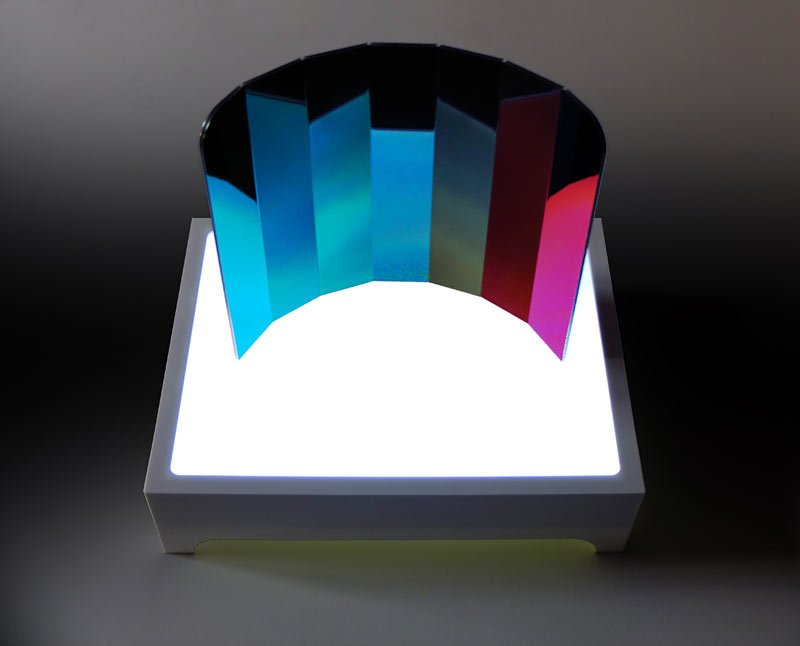
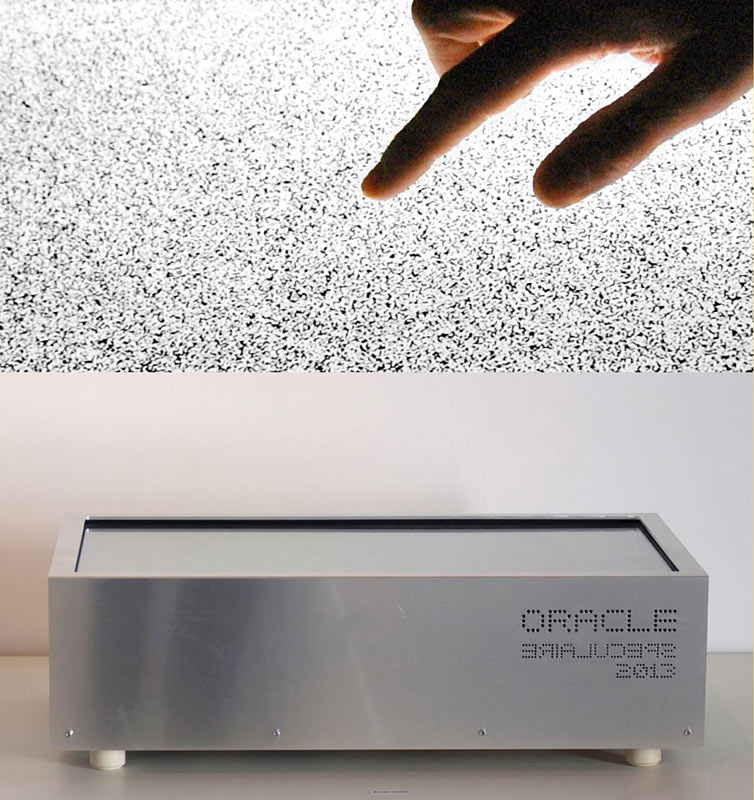
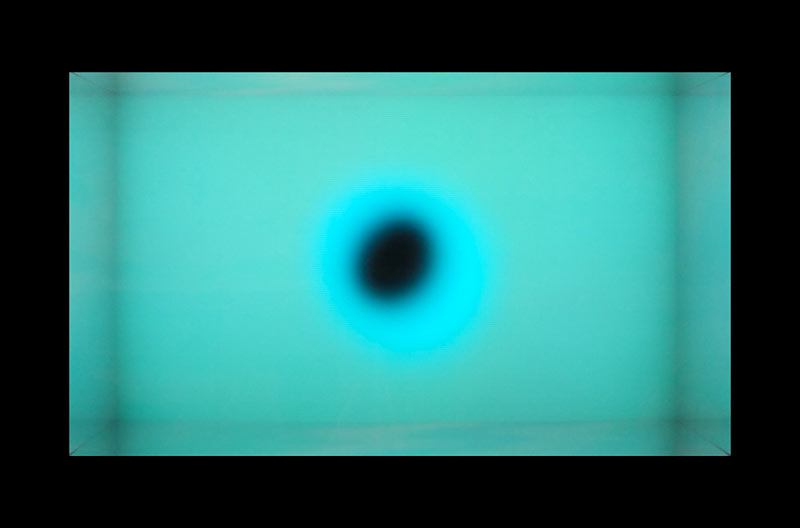
Light is ambivalent. Interacting with matter, it makes it visible, while itself remaining elusive. The ultimate limit that constitutes the exchange value between time and space, it escapes their hold. Light does not age. It is therefore connected with every point along its trajectory, past, present or future. For light, neither time nor space exists. While light is often seen as a symbol of self-evidence and intuition, the question of its nature remains a mystery to this day. This question lay at the origin of successive scientific revolutions over the past centuries. Alternately wave or particle, light would ultimately be defined, according to quantum physics, by a combination of these two aspects, embodied by the photon. But this third way continues to elude us, for we cannot conceive of it on the basis of our sensory experience of the world. The behaviour of the photon is indeed strange, to say the least, leading to a paradoxical, even absurd, vision of reality. Quantum physics describes it as a probability wave, in which superposed states coexist. It is thus supposed to occupy the whole of space until an act of measurement reduces this set of possibilities to a single one, located at a precise point. Building on these conceptions, certain contemporary theories connect with the concept of the multiverse, in which new universes are constantly created, corresponding to the alternatives that are not realised in our own. Some interpretations of these theories give the observer a central role. As if observation modified the phenomenon observed. One could thus see the outside world as a subjective creation. In my research, I consider light as a reality shared between an external phenomenon and consciousness. Visual perception thus becomes the very material of my work. Most of my devices bring into play the notion of point of view, so that the observer is confronted with multiple truths coexisting within the same space, highlighting their role in the emergence of their own vision. The eye becomes the place where a set of possibilities is reduced to a single truth, linked to one's position in space. In the same way, some projects present white light as the sum of infinite combinations, revealed in the imaginary space reflected by a black mirror. Our perceptual capacities can also be tested over time, so as to see literally how the brain creates white and the whole range of coloured hues from isolated events. I thus deploy the devices needed to give form to the questions and paradoxes arising from an attempt to think about light, putting vision to the test in order to question our certainties about what we call reality.



Subscribe to the Newsletter
