.webp)



find us
47 rue Charlot, 75003 Paris, France
Kikar Kedumim 14, Tel Aviv-Yafo, 68037, Israel
contact us
t. +33 (0)1 42 76 02 67
e. info@galeriecharlot.com






Olivier Ratsi
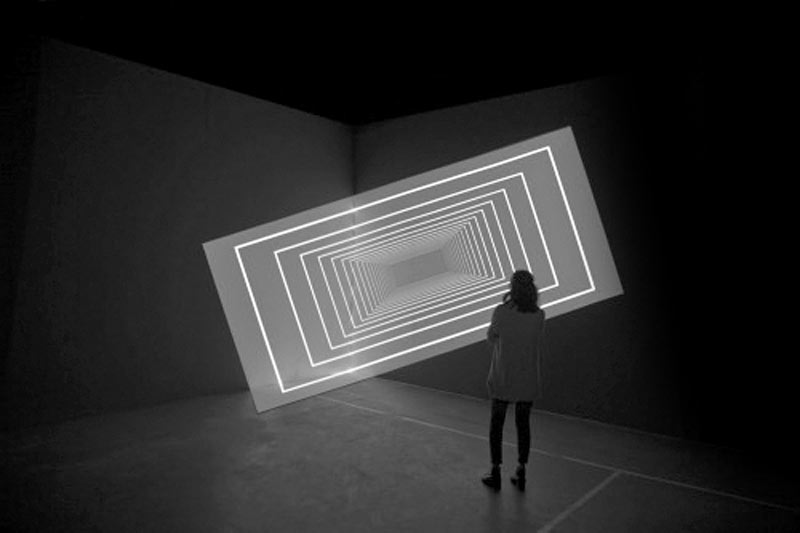
Olivier Ratsi, aka Nohista, materialises 3D objects as physical sculptures for the first time, incorporating perspective guides in a digital continuation of the Quattrocento. This algorithmic “Renaissance” draws on art history to question our contemporary modes of representation.
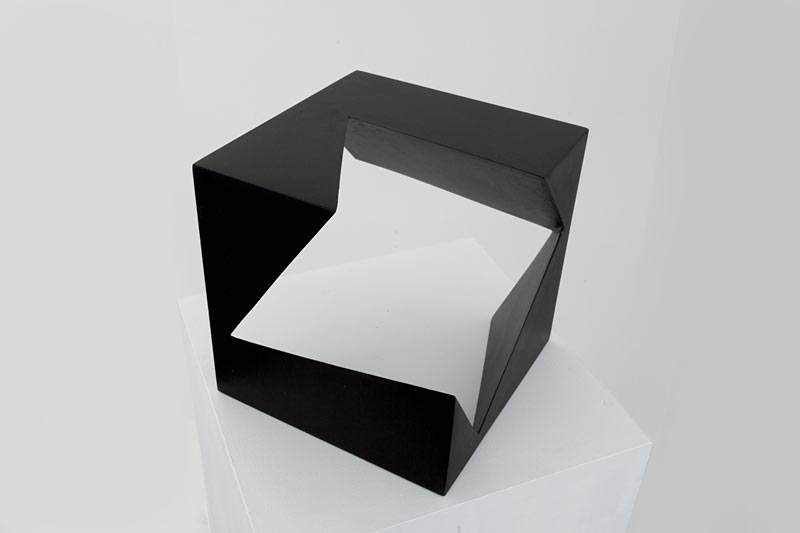
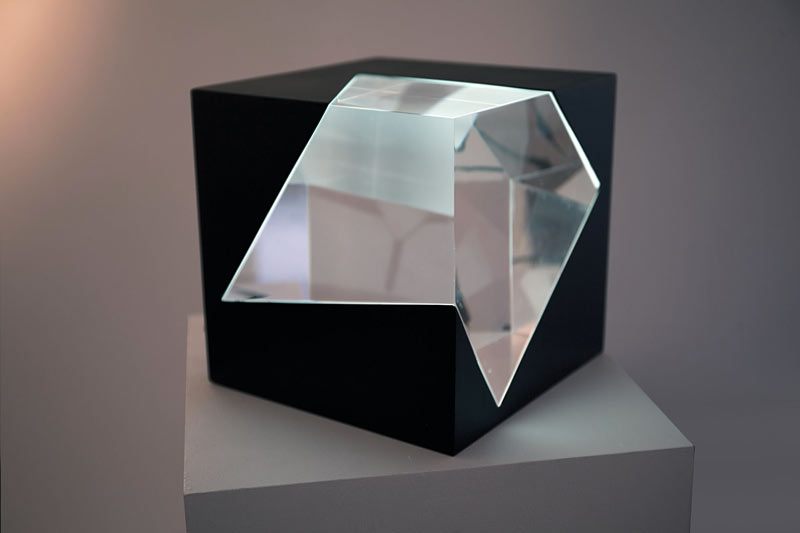
With “D'Echolyse à Perspicere”, Olivier Ratsi takes a decisive step in his exploration of the relationships between space, geometry and representation. After his series Delta, Onion Skin, RCTNGL and then Echolyse (begun in 2013), he decides to take his constructions off the screen and give them a three-dimensional, tangible existence in the real space of the gallery.
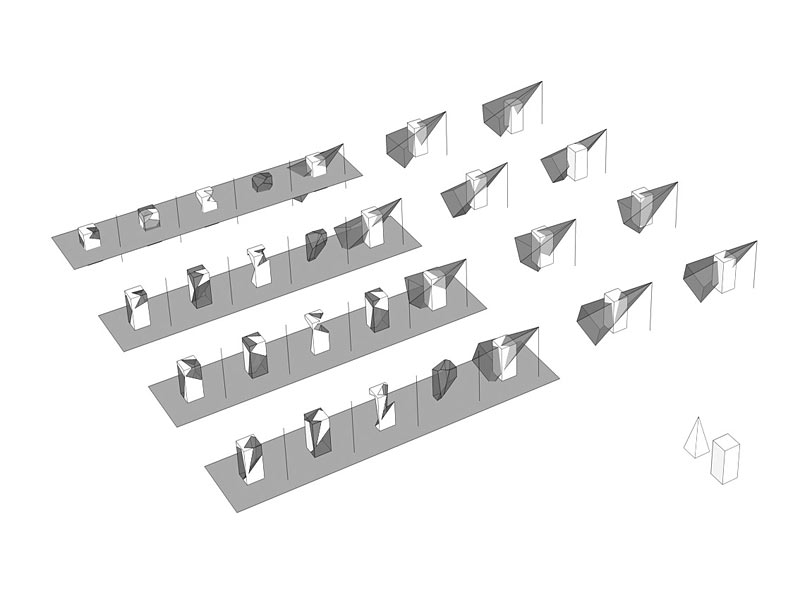
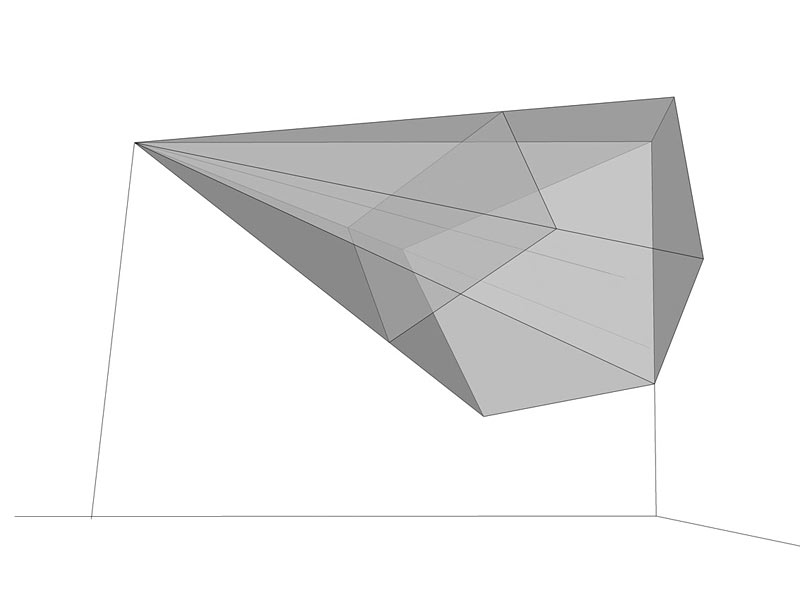
The term “perspicere” (Latin for to see through, to perceive clearly) refers to the linear perspective of the Quattrocento, the visual revolution that reshaped Western representation of space from the 15th century onwards. By incorporating perspective guides into his sculptures, Ratsi creates a dialogue between two historical moments of representational rupture: the Italian Renaissance and the contemporary digital age. These sculptures, born of purely virtual software designs, raise a fundamental question: what happens when an object designed for the screen crosses the boundary into matter? The viewer is invited to seek the exact viewpoint from which the sculpture reveals its complete geometric coherence — a perceptual exercise that is also a meditation on the very nature of representation and on our relationship to space.
Olivier Ratsi recalls essential aspects of art history, always through the prism of the digital tool. His series Echolyse, begun in 2013 after the works Delta, Onion Skin and RCTNGL, leads him, in his exhibition at Galerie Charlot, to physically materialise 3D objects originally intended for pure software design. He incorporates perspective guides into them, as a digital continuation of the linear perspective of the Quattrocento. This digital “Renaissance” will thus take the form of sculptures in which the viewer is invited, as in landmark works by Felice Varini or Georges Rousse, to find a viewpoint — a single, dogmatic vanishing point — and takes part in a conceptual and aesthetic movement of rematerialisation.
As part of Némo - Biennale Internationale des Arts Numériques Paris / Idf
Creating a rupture in objective reality, his creations are intended less as a trigger for emotions or a means of disturbing the senses than as a catalyst for viewpoints and for cultural and psychological references. The viewer is thus in no way deprived of their subjective capacity to reconstruct reality, and is invited to take a position in order to experience the work according to their own feelings.
His work has been featured in The New York Times Magazine, for which he produced a commission, as well as in digital art festivals such as Elektra and Mutek in Canada, Mapping Festival in Switzerland, in Korea, in Taiwan, at the Croisement festival in China, in Mexico, Brazil, Japan and, in France, at Némo, Scopitone, Vidéoformes and Bains Numériques...
Olivier Ratsi co-founded ANTIVJ in 2007, a “visual label” specialising in audiovisual projections, architectural performances and light installations.





Subscribe to the Newsletter
