.webp)


find us
47 rue Charlot, 75003 Paris, France
Kikar Kedumim 14, Tel Aviv-Yafo, 68037, Israel
contact us
t. +33 (0)1 42 76 02 67
e. info@galeriecharlot.com





Thomas Israël
Thomas Israël's third exhibition at Galerie Charlot, EXILT — a contraction of “Exil” (exile) and “Exit” — confronts the urgency of forced departure and the Syrian crisis through code, Indian ink and generative art.

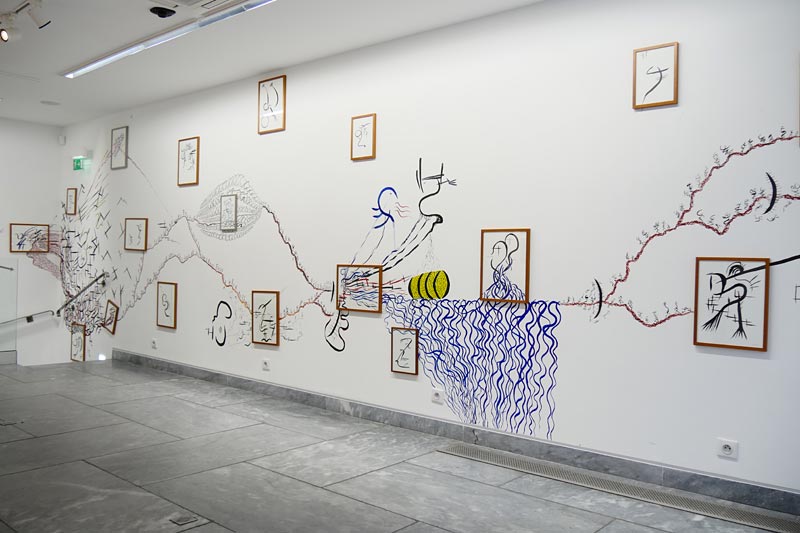
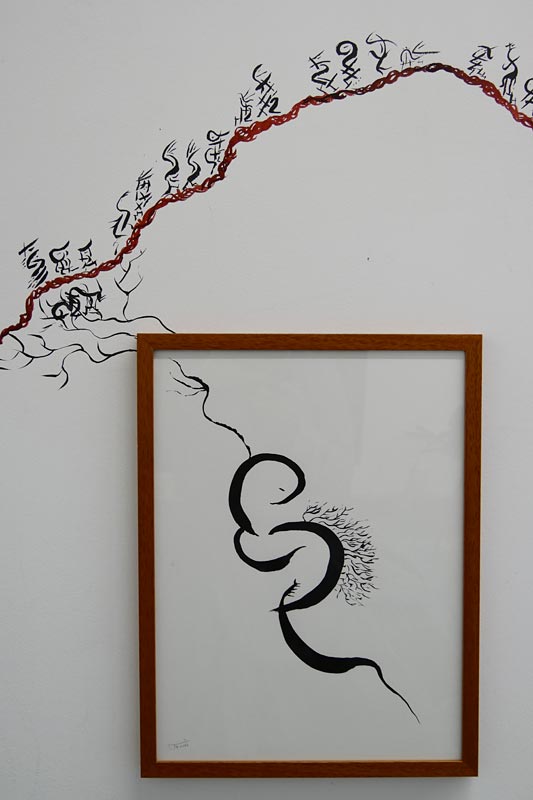
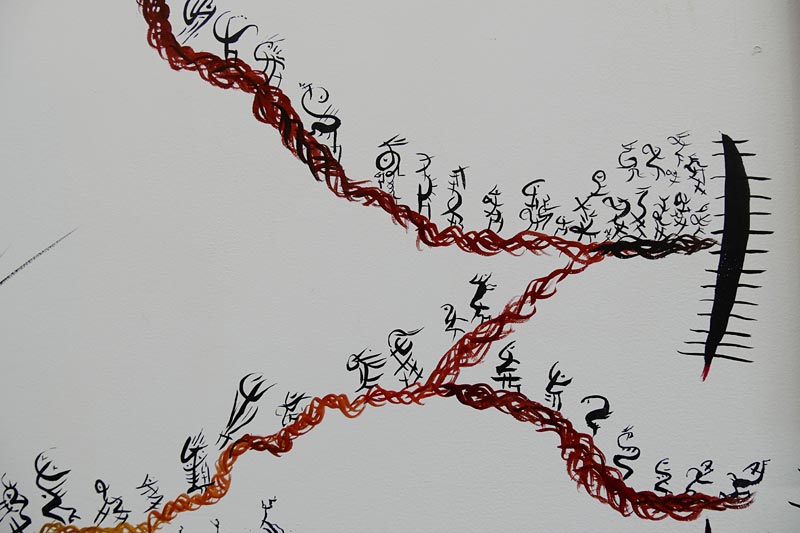
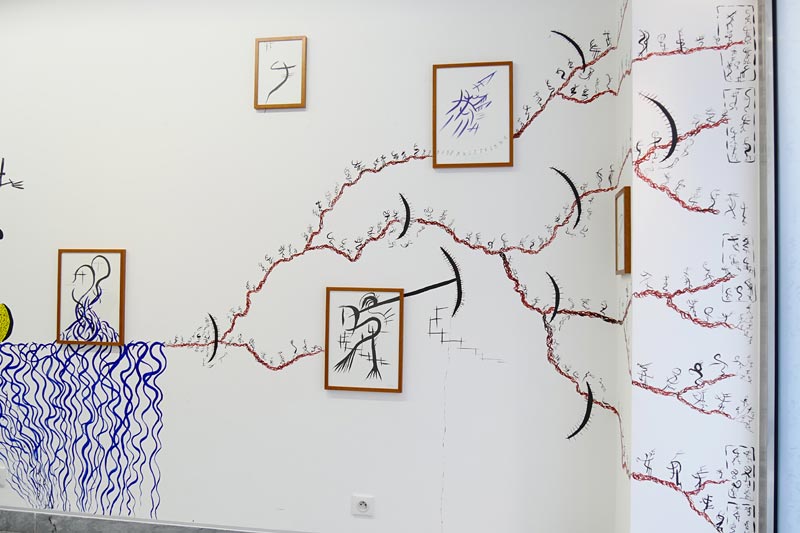
The son and grandson of refugees, Thomas Israël carries within him a memory of exodus that deeply informs his work. With EXILT, he tackles the contemporary tragedy of Syrian displacement head-on, combining his favourite tools — computer code, ink drawing, typography — in a gesture that is at once intimate and political. The mural drawn in Indian ink directly on the gallery wall forms the heart of the exhibition: an allegorical crossing in which each sign, tiny but singular, represents a life suspended between two worlds.
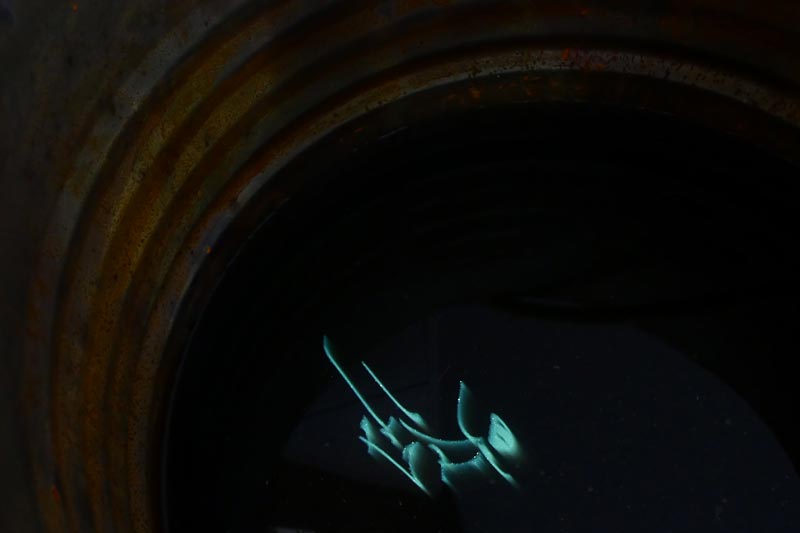
Thomas Israël treats letters and signs as units of meaning as much as visual forms. His graphic language, nourished by the history of writing and by the possibilities of generative code, transforms the abstraction of migratory flows into a human, sensory experience. The exhibition also brings together generative works on screen, in which signs form, disintegrate and re-form in a loop — a visual echo of endless wandering. EXILT is a work of testimony and resistance, a way for the artist to give form to what resists all direct representation.
A fusion of the words “Exil” and “EXIT”, the title of Thomas Israël's third exhibition at Galerie Charlot refers to the urgency of leaving a country and to the consequences of these unavoidable departures.
The son and grandson of refugees, Thomas Israël brings his artistic sensibility to bear on the current forced exile of thousands of Syrians. For the occasion, he will create a mural in Indian ink on the gallery wall, an allegorical crossing that will lead us along the trail of the Syrian exodus, where each sign, tiny but unique, represents a life in suspension.
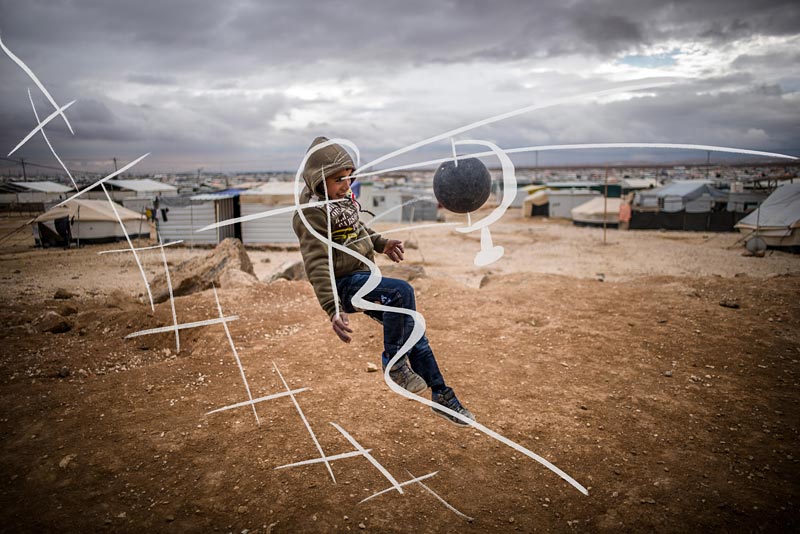
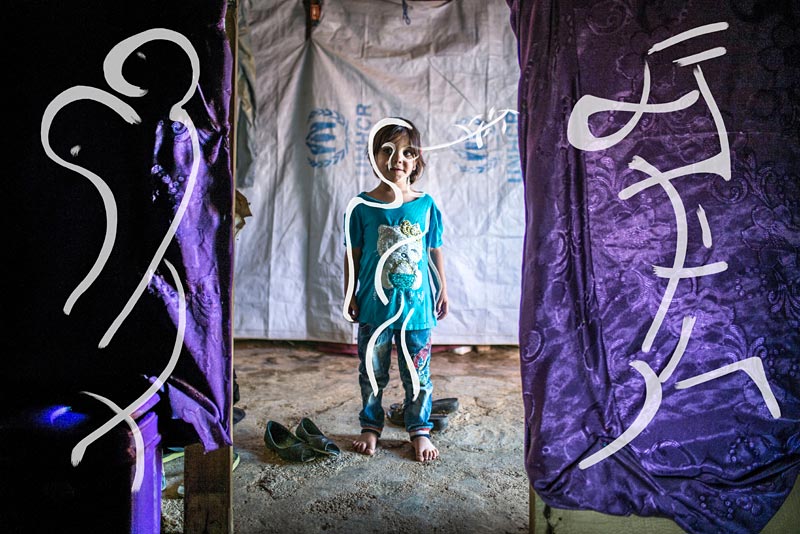
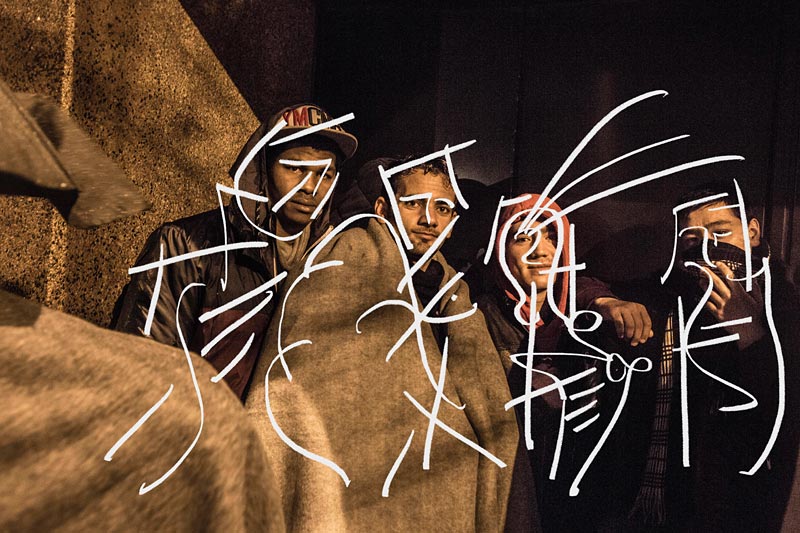
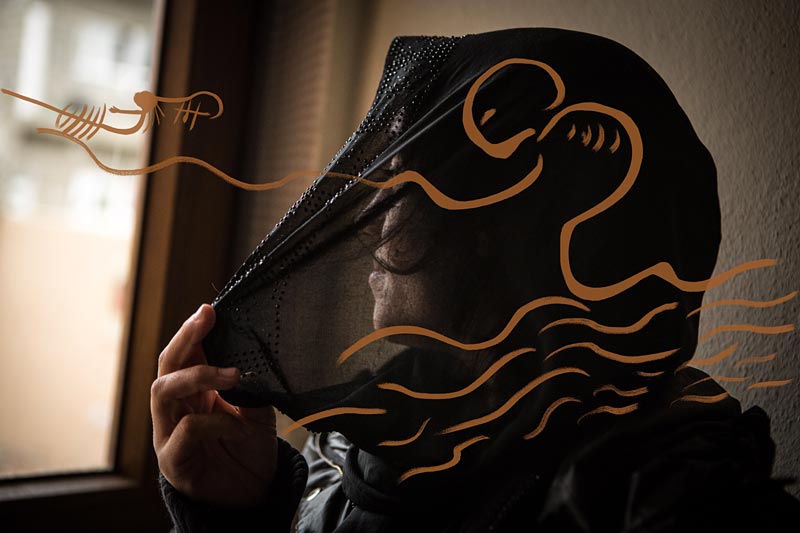
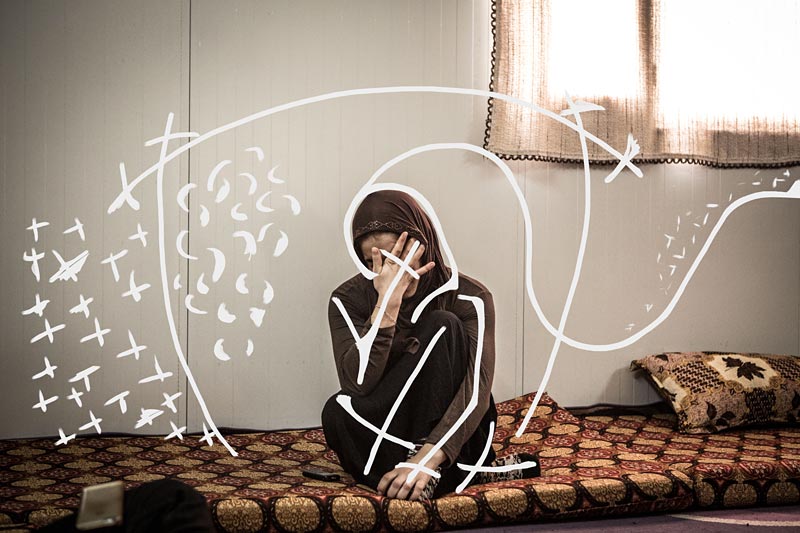
In an attempt to restore humanity to a contemporary narrative in which political stakes blur the human drama, he is collaborating with three leading field photojournalists on as many video works: Reza (National Geographic/World Press Photo Award/Infinity Award), Johanna de Tessières (La Libre Belgique/Paris Match/Handicap International) and Olivier Papegnies (Collectif Huma and La Libre Belgique/Médecins du Monde/Nikon Photo Press Award).
Working from their photographic portraits of exiles at different stages of their journeys — in refugee camps in Lebanon, on the road, in the Calais Jungle, or outside the Immigration Office in Brussels — Thomas Israël traces signs, curves, lines and dots on their faces and bodies, urging our gaze to linger longer to grasp their uniqueness and preciousness, to imagine a before and an after. Through this gesture, the instantaneity of the photograph extends into our imagination, giving us time for empathy.
To the geopolitical rupture that causes the forced departure of these victims is added an inner exile. Through his signs, Thomas Israël indicates a biographical trajectory inscribed on the body. To the poignant photograph is added a level of reading personal to the artist, linked to a transgenerational memory of exodus. All these trajectories are transformed into a kind of alphabet, the artist's own writing, expressing what language and reason cannot explain.
Thomas Israël invites us to take a stand beyond images and figures. He confronts us with our responsibilities, our beliefs, our fears and our hopes, and invites us to refocus on Humanity.




Subscribe to the Newsletter
